
Swarms

If you have a swarm of honey bees you want removed from your property,
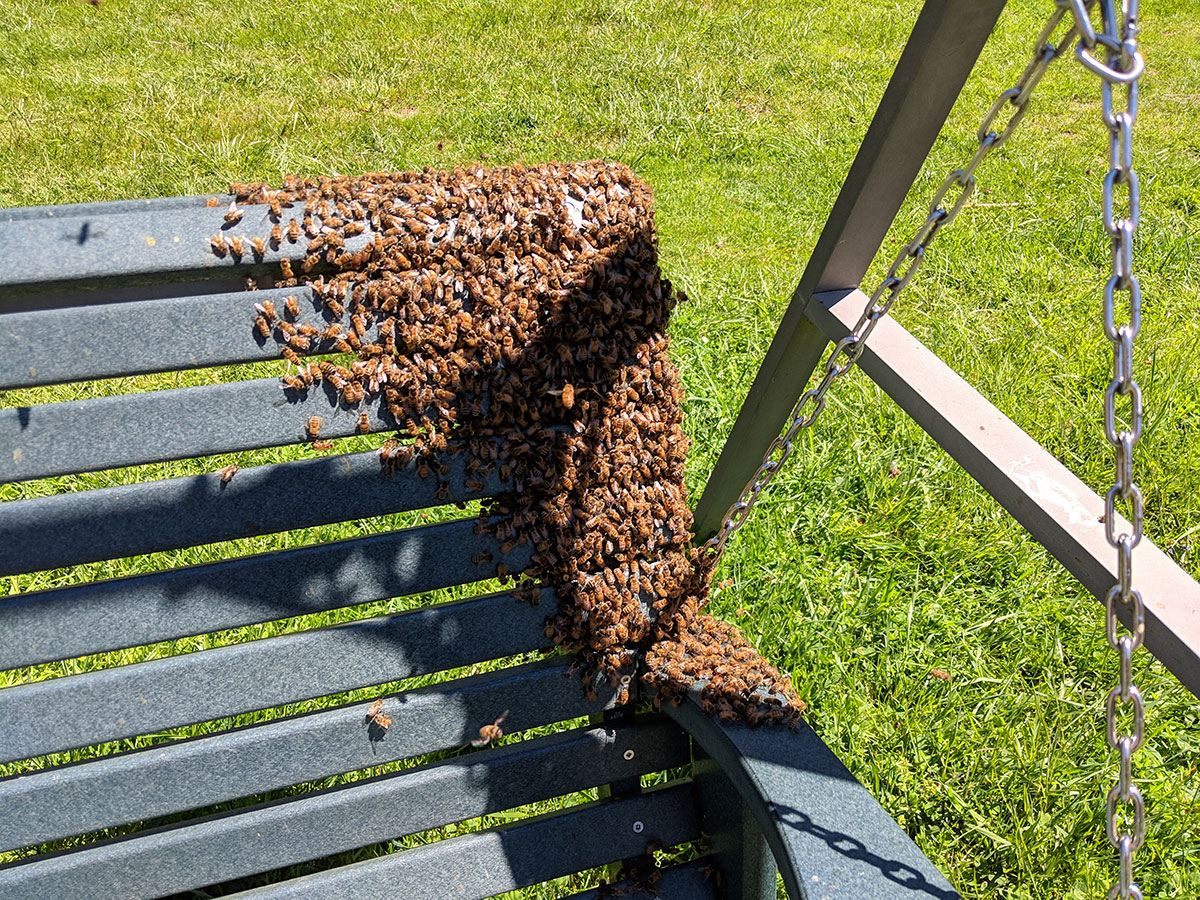
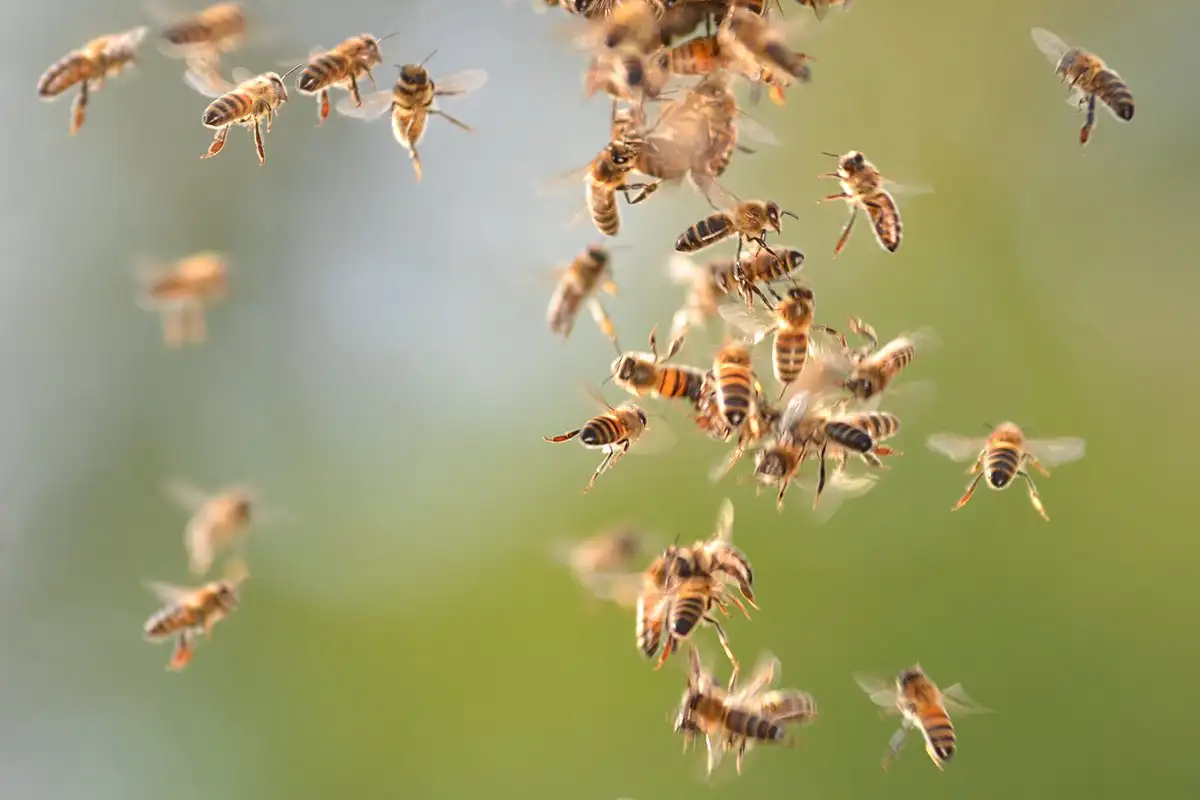
one of our beekeepers may be able to help you.
During the course of the year we receive a significant number of calls from the public regarding swarms of bees that they would like removed. Many of these calls however turn out not to be about swarms of Honeybees but relate to Solitary Bees, Bumblebees, Wasps or Hornets.
In order to deal with the issue, it is important to identify the type of insect involved.
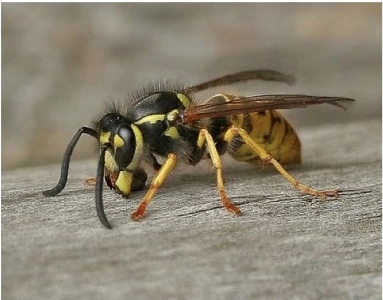
Wasp
Wasps are a common problem during the Summer and Autumn. They are very beneficial as they feed on smaller insects that are usually considered as pests by gardeners. Wasp nests can become very large and it’s important to distinguish these from Honeybees. Wasps will not swarm and form clusters and can make a nest virtually anywhere that is dry. Usual places include, inside your roof space, in hollow logs or branches, in garden sheds, compost bins and holes in the ground. Beekeepers will not deal with wasps and you are advised to contact local pest control companies or the British Pest Control Association (BPCA)
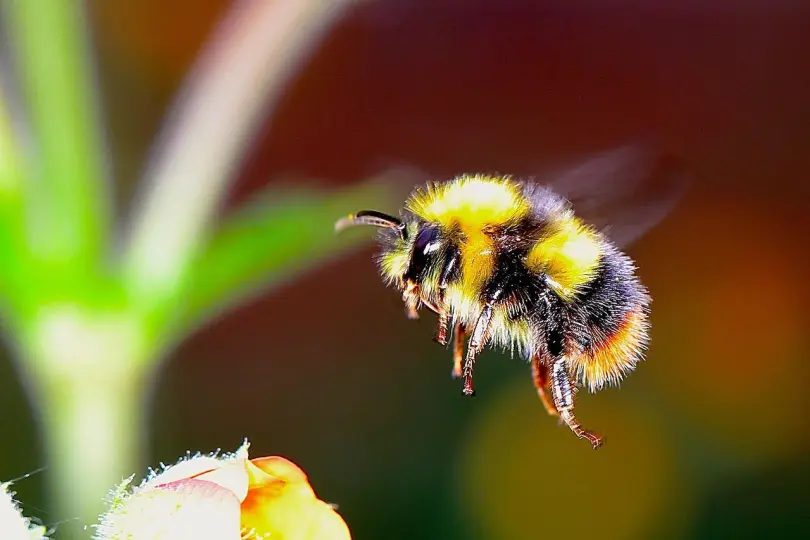
Bumble Bee
This is one of the 24 different species of Bumblebee found in the UK. They are generally much larger and hairier than the Honeybee. They build nests in a variety of places including under sheds, in roofs, old nest boxes and compost bins. They are short lived nests that will die out by the end of summer. If you happen to discover a nest of bumblebees, in your garden, then consider yourself lucky! The best advice is to leave them alone – they are not seeking to sting you. However, if they simply must be moved, you may find there are a few beekeepers who would be able to help, rather than see the nest destroyed. For advice contact the Bumblebee Conservation Society.
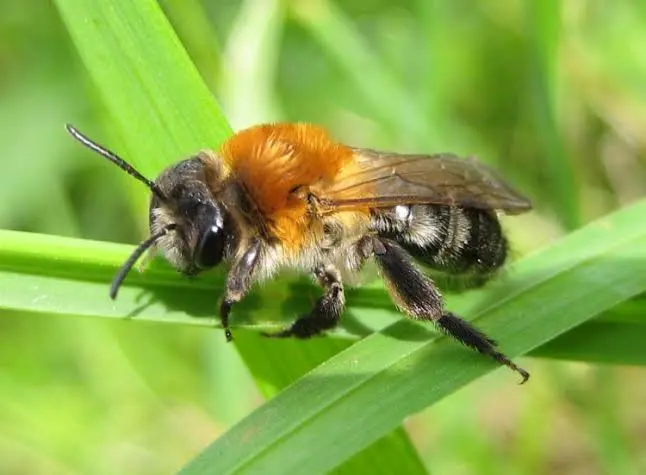
Solitary Bee
There are 245 species of solitary bees in the UK. As their name suggests they do not make nests, the female’s lay single eggs in holes in the ground, under roof tiles or in masonry. On occasions, they can give the appearance of swarming bees as the video below shows. If you are lucky enough to have these around your property, please do not harm them. Their emergence will only be short lived while the bee’s mate and the females lay their eggs to emerge the following year. The video (2) shows the emergence of Ivy bees that emerge in late August early September when the Ivy plants are in flower. The second video (1) shows the males of the species trying to mate with a single female.
www.bumblebeeconservation.org/learn-about-bumblebees/solitarybees
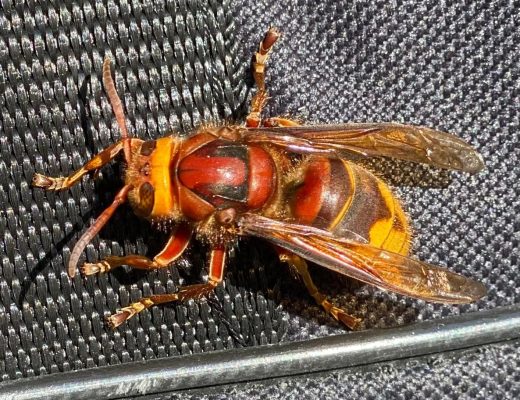
European Hornet
The European Hornet is larger than the wasp and again is something that the Beekeeper will not be able to deal with. They usually build their nests in holes in trees and again you should contact your local pest control company if they are causing you a problem.
Yellow-Legged Hornet
The Asian Hornet, now known as the yellow legged Hornet, is an invasive species to this country. It is of real concern to Beekeepers as a major threat to bee colonies. If you think you have seen one or have a nest, please take a photo, download the Asian Hornet Watch app or report it to: www.ceh.ac.uk/non-native-species-information-portal
Honey Bee
The Honeybee is the only insect that collects and stores food to enable the colony to survive the winter. Our Beekeepers are only insured to deal with swarms of Honeybees. There are separate solutions to the other groups of insects. Honeybees will naturally swarm as a way of increasing their number of colonies. The swarming season can start as early as April, if the weather conditions are favourable, but usually May and June see the majority of swarms produced.
Removing a swarm of honey bees
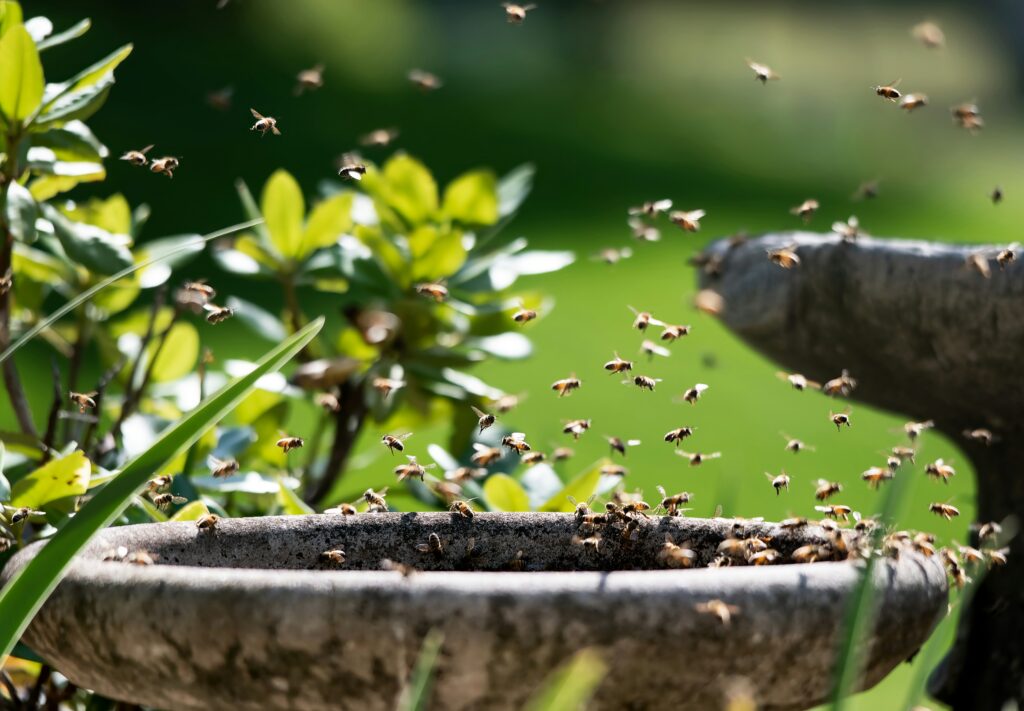
If you have a swarm that you would like removed, please contact the appropriate beekeeper listed at the bottom of this page. Please take a few photos or a video from a safe distance so that the beekeeper can know what to expect when they visit. There will usually be a small charge for the collection of between £30-£40 to cover travel and rehoming costs.
It is important that action is taken to remove a swarm as leaving it could result in the bees making their permanent home in the place they have settled or flying off down a neighbour’s chimney and causing a more difficult problem.
If you think you have a Honeybee swarm that has managed to get into your house either through a crack in the wall, hole in your roof soffit or down your chimney, this is something our beekeepers can’t deal with. The bees can’t be coaxed out, smoked out or sucked out so you will need the services of a company that specialises in removing bees from buildings.
For this type of problem contact UKBR ( UK Bee Removers): www.ukbr.org
Never call the 999 services unless it is an emergency – this is very unlikely.
If you have a swarm of honey bees, contact one of our swarm controllers who may be prepared to send someone to remove the swarm if it is accessible.
Beekeepers may charge £30 for this service in order to cover for the various expenses incurred in re-locating a swarm. Do not call us if you have wasps – contact your local council or exterminator.
ONLY if you have a swarm of honey bees should you contact one of our swarm collectors.
Romford Beekeepers Swarm Collectors
If you have a swarm of honey bees, contact one of our swarm collectors below. We have provided the area and their postcode so you can choose the one closest to you first.
Please remember this is not the emergency services. We are not available 24 hours a day and sometimes we will not be able to help.
If you do not hear back from one, try the next on the list.
Brentwood (CM14)
Nick Messenger – 07775 631978
Brentwood (CM15)
Paul Wiltshire – 07870 258192
Dagenham (RM8)
Zak Bickhan – 07879 616890
Dagenham (RM10)
Annette Friday – 07850 419709
Grays (RM16)
Dean Sykes RM16 07930 326245
Hornchurch (RM11)
Norman McDonald – 01708 447791 or 07807 707419
Hornchurch (RM12)
Filippo Negri – 01708 440068 or 07423 015420
Ilford
Padraig Floyd – 07894 419800
Rainham (RM13)
Elizabeth Davies – 01708 553361 or 07799 135907
Adam Ozbek – 07917 731653
Romford (RM4)
Roger Honey – 07889 785089